
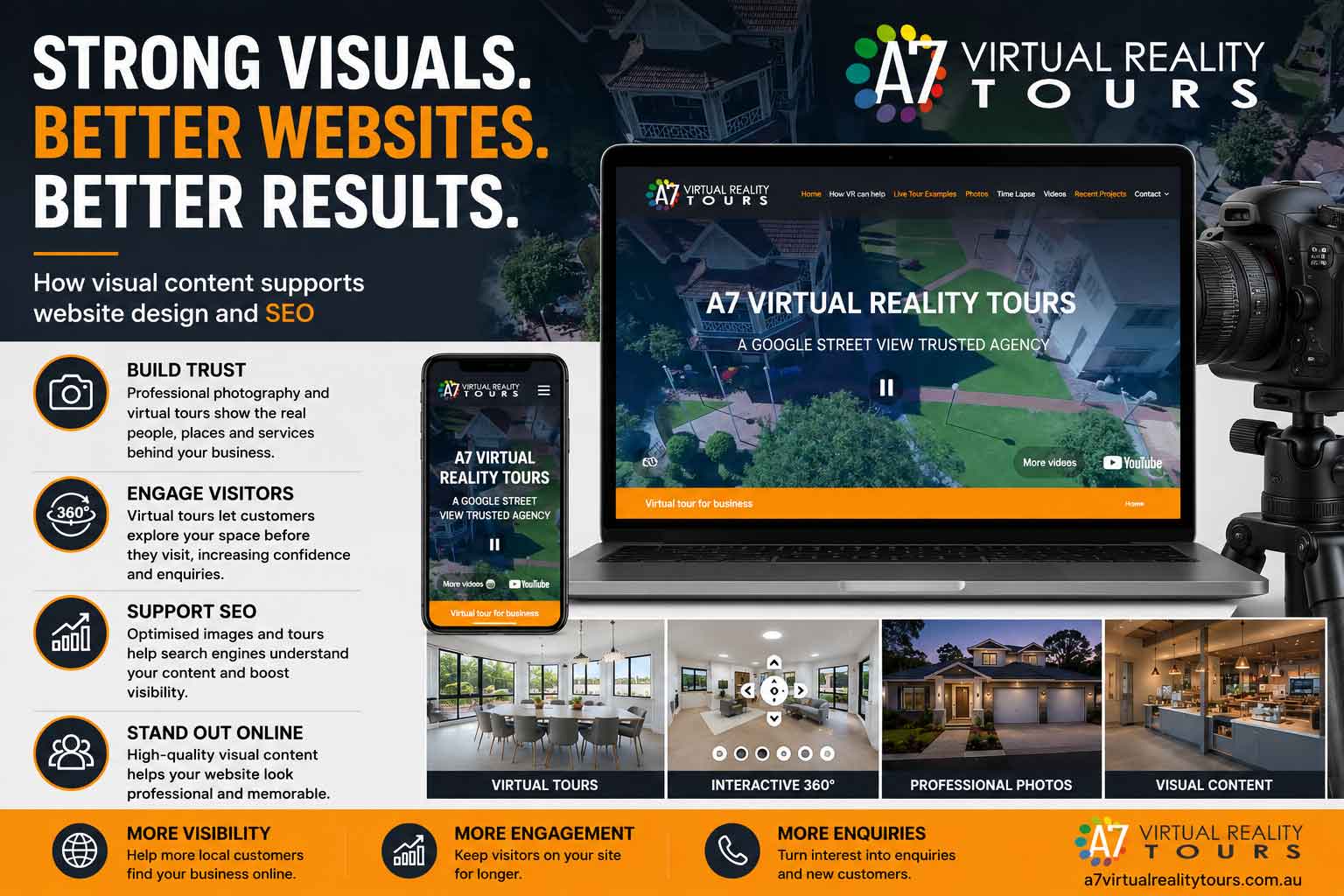
Visual content for SEO is most effective when it does more than decorate a website. Professional photography, virtual tours, video and original branded graphics can help visitors understand a business, build trust and engage with a page for longer.
Good visual content also supports the wider website structure. Images can help explain services, reinforce location relevance, improve page presentation and make detailed information easier to absorb.
However, visual content works best when it is planned alongside website design and search engine optimisation rather than added as an afterthought.
Why Visual Content Matters to Website Visitors
People often form an opinion about a business within seconds of opening its website.
Before reading every paragraph, visitors usually notice:
- The quality of the main image
- Whether the website looks current
- Whether the business appears genuine
- Whether the service is easy to understand
- Whether the people, premises or products look professional
Original visual content can answer these questions quickly.
A professional photograph of the business owner, team, premises, completed work or equipment gives customers something real to evaluate. It can make the business feel more established and credible than a website built entirely from generic stock images.
Original Photography Builds Trust
Stock photography has a place in website design, but it cannot always communicate the identity of a real local business.
Visitors are more likely to connect with imagery that reflects the actual company they may contact. This is particularly important for service businesses, where customers may be inviting a tradesperson, consultant or photographer onto their property.
Useful original images may include:
- The business owner and team
- Branded vehicles
- Business premises
- Equipment and work processes
- Completed projects
- Products or display areas
- Local landmarks and service locations
These images help confirm that the business is active, local and capable of delivering the service being promoted.
How Visual Content for SEO Supports a Page
Images do not rank a page simply because they look attractive. Their value comes from how well they support the page’s subject and the visitor’s needs.
For another practical example, read our guide on how Adelaide trade businesses can build trust online.
Effective visual content for SEO can:
- Clarify what a service involves
- Provide evidence of real experience
- Make long pages easier to read
- Support image search visibility
- Reinforce local relevance
- Improve user engagement
- Encourage visitors to explore more of the website
For example, a plumbing website may use original images of the team, service vehicles and equipment. A restaurant may show its dining spaces and food. A real estate business may use professional property photography and immersive tours.
The image should contribute to the subject of the page rather than exist only as decoration.
Virtual Tours Help Customers Explore Before Visiting
A virtual tour gives website visitors the opportunity to explore a location before making contact or arriving in person.
This can be particularly useful for:
- Retail stores
- Restaurants and cafés
- Hotels and accommodation
- Fitness centres
- Medical and allied health practices
- Schools and childcare centres
- Event venues
- Showrooms
- Commercial properties
A well-produced tour can answer practical questions that ordinary photographs may not cover. Visitors can understand the layout, atmosphere, scale and accessibility of a location before they arrive.
This may improve the quality of enquiries because prospective customers have already developed a clearer understanding of the business.
Visual Content Should Match Search Intent
Search intent describes what a person is trying to achieve when they perform a search.
Someone searching for a venue may want to understand its size and layout. Someone looking for a local tradesperson may want to see evidence that the business is genuine and professional. A customer comparing accommodation may want to explore rooms and facilities.
The most effective visual content for SEO responds directly to these needs while also helping customers understand the business more clearly.
Instead of adding unrelated images throughout a page, businesses should consider:
- What does the visitor need to see?
- Which details will build confidence?
- What questions can an image or tour answer?
- Which parts of the service are difficult to explain with text alone?
- What makes this business visually different from competitors?
This produces more useful content for customers and a more coherent page for search engines.
Website Design and SEO Need to Be Planned Together
Strong images cannot compensate for a poorly structured website.
Visual content needs to work within a website that has:
- Clear navigation
- Logical service pages
- Readable page layouts
- Fast loading times
- Mobile-friendly design
- Useful calls to action
- Relevant internal links
The best results are achieved when the designer, photographer and SEO strategist understand the role of each page before the images are created.
This allows the visual content to be planned around real marketing needs rather than simply filling empty spaces in a template.
A Practical Adelaide Website Project
A useful example is the Local Trades Today website project.
Adelaide Website Design developed the website, while Succinct Ideas planned the broader SEO architecture and content framework. The project required design, content, local search strategy and visual presentation to support one another.
The Adelaide Website Design case study explains how website development and SEO were coordinated from the beginning.
Peter Cornish from Succinct Ideas has also published a detailed explanation of the strategic SEO approach used for Local Trades Today.
The project demonstrates an important principle: visual presentation, website structure and search strategy should not be treated as separate tasks.
Images Need Proper Website Optimisation
High-quality images can improve a website, but oversized or poorly prepared files can also slow it down.
Before uploading images, website owners should consider:
- Appropriate image dimensions
- Modern file formats such as WebP
- File compression
- Descriptive file names
- Accurate alt text
- Whether the image should load immediately or later
- How the image displays on mobile devices
A photograph taken directly from a camera may be far larger than the website needs. Uploading the full-size file can increase loading time without improving what the visitor sees.
Images should be prepared for their intended position and display size.
Writing Helpful Alt Text
Alt text describes an image for people who cannot see it and can also help search engines understand the image’s purpose.
Good alt text should be clear and accurate.
For example:
- Weak: image123
- Weak: best business SEO Adelaide website photo
- Better: Adelaide restaurant dining room shown in a virtual tour
- Better: Local plumbing team standing beside a branded service vehicle
Alt text should not be used to repeat keywords unnaturally. It should describe what the image shows and, where relevant, explain its connection to the page.
Branded Graphics Can Explain Complex Ideas
Not every subject is best represented by a photograph.
Branded graphics and diagrams can be useful when a business needs to explain:
- A process
- A service comparison
- A customer journey
- Project stages
- Technical information
- Research findings
- Marketing results
A well-designed graphic can turn a complex idea into information that is easier to understand and share.
It can also give a blog article a stronger visual identity than a generic stock image.
Visual Consistency Strengthens the Brand
Photography, graphics and website design should feel as though they belong to the same business.
Visual consistency may include:
- Brand colours
- Logo placement
- Typography
- Image style
- Lighting and composition
- Graphic icon styles
- Consistent cropping and dimensions
This does not mean every image must look identical. It means the website should present a recognisable and professional visual identity.
Consistency helps visitors remember the business and makes the website feel more deliberate.
Visual Content Can Support Local Marketing
Local businesses often have strong visual opportunities that national brands cannot easily copy.
These may include:
- Recognisable local locations
- Real staff members
- Local projects
- Community involvement
- Business premises
- Neighbourhood events
These details help connect the website to the area it serves.
For a business targeting Adelaide customers, original local imagery can be more credible than generic images that could belong to any business in any city.
Plan the Images Before Building the Page
Visual content is often more effective when it is planned before the website page is completed.
This allows the photographer or designer to create images for specific purposes, including:
- Website banners
- Service page introductions
- Team sections
- Project galleries
- Blog articles
- Google Business Profile posts
- Social media content
- Printed marketing material
A single photography session can often produce a library of useful visual assets when the required formats and subjects are decided in advance.
Bring Photography, Website Design and SEO Together
Visual content for SEO should support the business story, the page topic and the customer’s next step rather than being added only for decoration.
Professional photography and virtual tours can improve trust. Strong website design can present that content clearly. SEO strategy can help the right audience discover it.
When these elements are planned together, the website becomes more than an online brochure. It becomes a practical marketing asset designed to attract, inform and convert potential customers.
Need professional visual content for your business? Contact A7 Virtual Reality Tours to discuss virtual tours, commercial photography and visual content for your website and online marketing.